
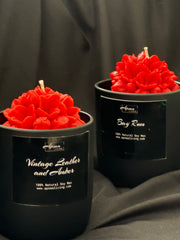


The New Indian Gifting: Why a Handmade Candle Beats a Mithai Box Every Time
By Apsaa Living | Handmade Candles, Gifting Culture, Indian Lifestyle
There's a moment we've all lived.
You open the door on Diwali morning, or after a housewarming, or at a baby shower — and someone hands you a gift wrapped box, tied with a golden ribbon. Inside: a neat row of kaju katli, or a mix of assorted sweets, or a fancy tin of dry fruits. And you smile. Of course you smile. Because it's the thought, right?
Except — honestly — there often isn't that much thought. Not really. It was ordered in bulk, presented the same way to fifteen other people that week. You eat the mithai over two days, stack the tin near the kitchen window, and by the following Tuesday, it's like it never happened. No memory. No trace. No moment.
Now think about the last time someone gave you something truly unexpected. Maybe a candle — creamy and soft-scented, nestled in a coconut shell, with a handwritten note tucked beneath it. Something small businesses and independent makers in India are creating with their hands, in their homes, in their late nights.That candle probably still sits on your bedside table. Lit on quiet evenings. Noticed every morning.
That's the difference.
The Mithai Box Had Its Moment — And It Was Beautiful
Let's be fair. The mithai tradition is deeply rooted in who we are as a culture. Sweets have always been the language of celebration in India — they marked harvests, new beginnings, festivals, and alliances.
That is not nothing. That never was nothing.
But gifting cultures evolve because people evolve. And somewhere in the last decade, the mithai box started feeling more like a formality than a feeling. You give it because it's easy. Because everyone does it.
And the person receiving it? They're gracious. They're warm. But they've already received six other boxes this week.
How Indian Gifting Is Quietly Changing
Walk into any urban Indian home today — whether it's a Gurugram apartment, a Bengaluru villa, or a tastefully decorated flat in Chandigarh — and you'll see something interesting. People are curating their spaces with intention. There are scented diffusers on bookshelves, dried flower arrangements on dining tables, carefully chosen cushions and handwoven throws.
The home has become a reflection of identity. And gifts, for a growing number of people, are expected to honour that identity.
This shift isn't just sentimental. India's gifting market has been growing steadily, and within it, the segment of handcrafted, personalised, and experience-driven gifts has been gaining momentum — especially among urban consumers who have disposable income and strong aesthetic values. Corporate India has also taken note: companies are increasingly moving away from generic festival hampers toward curated, artisanal gifting that tells a story about the brand and the people receiving it.
The question is no longer just "what to give" — it's "how will this make them feel when they open it?"
Why Candles Have Become the New Language of Gifting
Of all the things that have emerged in this new Indian gifting vocabulary, the handmade candle holds a particularly special place. And it makes sense when you think about it.
A candle is not just an object. It's an experience waiting to happen. When you gift someone a candle, you're gifting them a moment — a Tuesday evening when the room smells like sandalwood and they finally feel their shoulders drop. A Sunday morning with chai and a soft amber glow on their work desk. A night they needed something quiet and the flame gave it to them.
Candles carry fragrance, light, warmth, and stillness. All at once. And unlike a box of sweets, they don't disappear in two days. A good handmade candle lives in a home for weeks. It becomes part of someone's daily ritual. It gets placed somewhere visible — a shelf, a window ledge, the corner of a bathroom — and every time it's lit, it brings the gifter gently back to mind.
That's emotional longevity. You cannot buy that at a sweet shop.
The Handmade Difference — Why It Matters More Than You Think
There's something that happens when you hold a truly handmade product. You can feel it. The slight irregularity in the texture, the warmth of the wax, the fact that someone's hands were the last thing that touched it before yours. It carries a kind of quiet humanity.
Handmade candles in India are almost always made by small businesses — many of them women-led, operating from home studios or small workshops. When you choose a handmade candle as a gift, you're doing more than selecting a beautiful object. You're choosing to put money directly into the hands of a maker. You're supporting someone's creative livelihood. You're participating in an economy that values craft over convenience.
That's a gift with values built in.
Candles for Every Indian Occasion
One of the most practical things about handmade candles as gifts is how beautifully they fit across every occasion in our incredibly occasion-rich culture.
Diwali — the festival of light, quite literally. A premium scented candle in an artisan vessel is not just appropriate here; it's perfect. It extends the spirit of the festival beyond one evening.
Weddings and Bridal Showers — bouquet candles, chakra candles, and personalised message candles have become popular bridal gifting choices. Brides receive them as part of "things to help her unwind" kits.
Housewarming (Graha Pravesh) — what better gift for a new home than something that fills it with warmth and fragrance from day one?
Rakhi — brothers are giving sisters candles now, because sisters want something they'll actually use and love, not another box of chocolates.
Mother's Day — for the mother who has everything, a handmade candle that smells like her favourite flowers says more than any generic gift ever could.
Corporate Gifting — companies are increasingly choosing curated candle gifts for clients, because it positions them as brands with taste and intention.
A personalised candle doesn't just say "I got you something." It says "I thought about you."
The Instagram Effect on Indian Gifting
Let's talk about the role that visual culture has played in all of this, because it's significant.
Instagram and Pinterest didn't just change what people buy — they changed what people want to feel when they give and receive. The unboxing experience is now part of the gift. How it looks. How it smells when the tissue paper comes off. Whether it's worth a photo.
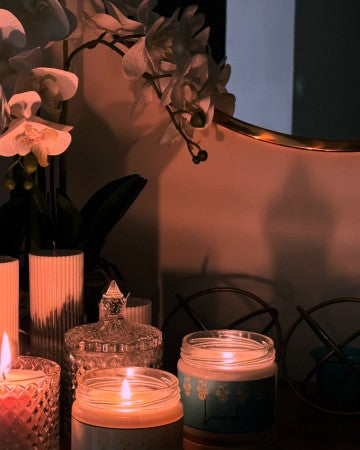
Handmade candles, almost without exception, photograph beautifully. The texture of coconut shells, the soft colours of botanical wax, the way a flame lights up a handcrafted vessel — these are visual gifts in every sense. Gifters are aware of this. They want to give something that makes the receiver reach for their phone.
And receivers? They style their candles. They put them in reels. They create little still-life moments with books and cups of tea.
The gift becomes content. The content becomes conversation. The conversation extends the gesture far beyond the moment of giving.
On Sustainability — Because It Is a Real Factor Now
Handmade candles, particularly those crafted with natural waxes and housed in reusable vessels like coconut shells, terracotta bowls, or glass jars, are a genuinely more conscious choice. The coconut shell, for instance, is a beautiful example of zero-waste Indian design — something discarded becomes something precious.
Indian consumers, particularly in urban areas, are increasingly factoring sustainability into their purchasing decisions. This isn't just about trends — it reflects a real shift in values, especially among younger buyers who think carefully about what they bring into their homes and what they put into the world.
Choosing a sustainable, handmade gift communicates something about the giver too. It says: I care about what I put into your home. And it says: I care about the planet we both share.
The Emotional Lifespan of a Gift
Here is perhaps the most honest distinction between a mithai box and a handmade candle:
A mithai box has an emotional lifespan of about two to three days. It is warm and welcome when it arrives. By day three, it's finished, forgotten, or still sitting in the corner getting slightly stale. A handmade candle has an emotional lifespan that can span weeks, sometimes months. Every time it's lit, there's a quiet return to the moment it was received. Every time the fragrance fills a room, it's a small reminder that someone thought of you deliberately.
A Soft Closing Thought
We are not suggesting that mithai loses its place at the table. It never will, and it shouldn't. There is something irreplaceable about the sweetness of tradition, about a diya-lit evening and a box passed between hands with a touch and a smile.
But there is also space — growing space — for gifts that do more. That linger. That become part of someone's home, their mornings, their small sacred rituals.
If you've been looking for a gift that feels as considered as the person you're giving it to, a handmade candle might be exactly what you've been searching for.
Not because it's trendy. Not because it photographs well, though it does.
But because when someone lights it on a random Wednesday evening and the room fills with warmth and fragrance, they'll think of you.
And that, really, is the whole point of a gift.
Apsaa Living creates handcrafted candles made with natural materials, including our signature coconut shell candles — designed for the modern Indian home and the thoughtful Indian gift-giver.
© Apsaa Living. All content original. For website use only.
Leave a comment